The Data Center Talent Crunch in the USA
18 March, 2026

From Rejection to Interconnection: Bill Severn on AI Networks, Data Gravity, and Playing the Long Game
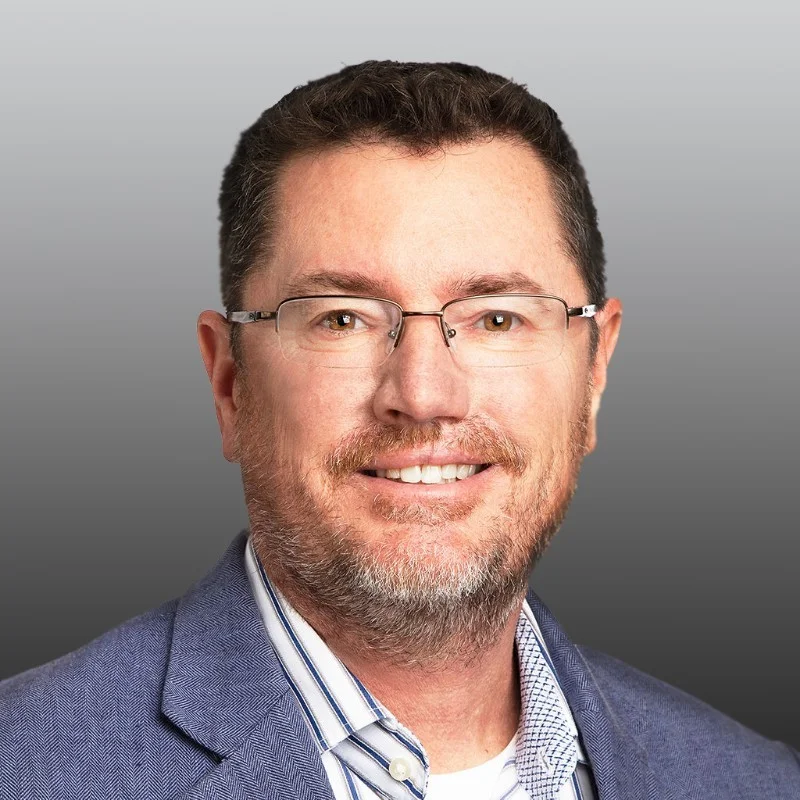
A conversation between Jack Rafferty and Bill Severn on the Route to Networking podcast
Before he led one of the most strategically connected buildings in the Midwest, Bill Severn sat in a parked car, driving around the same block four times, trying to build the courage to knock on his first door.
That door-to-door sales role in 1990 was commission-only. No mileage reimbursement. No guarantees.
“I could feel my body getting out of the chair,” Bill remembers of the interview. “But then I thought about what my mom was going to say when I got home.”
He stayed.
Three decades later, he is President and CEO of 1623 Farnam, one of the most connected carrier-neutral interconnection hubs in the United States, sitting at the crossroads of fiber routes, hyperscale campuses, and AI-driven network demand.
His story is not about luck. It is about leverage. Learning the entire system from the ground up. And staying the course when easier options were available.
Learning the System from the Bottom
Bill’s entry into telecom was accidental. A Kansas State graduate with a park resource management degree, he quickly learned there were 500 applicants for every park ranger role.
So he pivoted.
His first lesson came fast. For every ten doors he knocked, he sold one.
“That’s nine rejections for every one sale.”
Instead of quitting, he studied the process. He learned how installation teams, billing departments, and operations completed the sale he initiated. He understood that revenue depended on the full chain functioning correctly.
Starting at the bottom gave him something many leaders never develop: operational empathy and end-to-end awareness.
From Analog Cable to the Digital Era
Bill’s career maps directly onto the transformation of the telecom industry.
He began in the analog days. Limited competition. Slower change cycles.
Today, digital infrastructure evolves at an exponential pace.
“Change happens so much more rapidly,” he explains.
For Bill, leadership is no longer about controlling change. It is about normalizing it.
“How do you build a culture that embraces change instead of sitting at the water cooler complaining about it?”
That philosophy carried him from sales to COO roles and ultimately into interconnection leadership.
Why 1623 Farnam Matters
1623 Farnam is not just another data center.
It sits along the 41st parallel, a route chosen decades ago for deploying east-west fiber across the United States. Early engineers leveraged railroad rights-of-way through Omaha, creating a natural aggregation point.
When nearby fiber tenants were forced to relocate in the 1980s, they moved into Farnam. That moment created what Bill describes as data gravity.
When his team acquired the building in 2018, 40 networks were present. Today, there are more than 60 carriers and over 35 broadband providers. It is a direct connection point for Google Central One and Microsoft Azure ExpressRoute US Central. Multiple hyperscale campuses sit within a 10-mile radius.
But Bill is clear about the distinction.
“We’re content, eyeball networks, and network all aggregate. That’s what 1623 Farnam is.”
This is not a commoditized retail colocation facility. It is an ecosystem.
Broadband providers colocate to reach global networks. Content platforms deploy locally to reduce latency. Enterprises interconnect for resilience and route diversity.
“When you hit play on Netflix and get the spinning wheel, that’s latency.”
At Farnam, reducing that latency is the business.
The AI Narrative Most People Miss
At major industry events like PTC, the spotlight is on massive AI training campuses and multi-megawatt deployments.
Bill sees a quieter opportunity.
“Where we’re winning in the AI game, which nobody talks about, is the AI network component.”
AI inference and training clusters are only valuable if they can reach users. That requires dense, diverse, low-latency interconnection.
By focusing on the network layer rather than chasing hyperscale branding, Farnam has positioned itself in a lower-risk segment of the AI boom.
“No one tenant represents more than one and a half to two percent of our revenue. If one of them doesn’t make it, there’s not a lot of risk.”
It is a portfolio mindset applied to infrastructure.
The Next Five to Ten Years
Demand is not stabilizing. It is accelerating.
Bill describes negotiating with a client for nine months to finalize scope. The environment was built. Before the equipment was installed, the client required double the capacity.
“It’s evolving so rapidly.”
His prediction is clear. Networks are at risk of being underbuilt.
He anticipates increased deployment of one-to-five megawatt regional edge facilities in rural America, pushing low-latency content closer to users.
To prepare, 1623 Farnam is developing a second site just 0.2 miles from its flagship facility, maintaining ultra-low latency interconnection between both locations.
“We’re staying true to our knitting.”
The strategy is deliberate. Interconnection depth over hyperscale sprawl.
Career Advice: Play the Long Game
For graduates and engineers entering telecom, cloud, or interconnection, Bill’s advice is consistent.
“Learn everything you can. The skill sets required are changing every week.”
He encourages young professionals to stretch beyond formal job descriptions.
“If a leader gives you something outside your scope, do it and conquer it.”
He credits his own advancement to intuitiveness.
“That intuitiveness allowed me to find cracks and crevices that weren’t operating correctly and fix them.”
One of his most important lessons came from an early leadership disappointment. Rather than complain about a weak manager, he shifted perspective.
“I decided I was going to fix everything instead of worrying about what John didn’t do.”
He made his leader look good. He stayed in the shadows. But he became more capable.
It was not immediate gratification.
It was long-term positioning.
When asked about the best early decision he made, he answers simply:
“Stay the course.”
The Quick-Fire Round
We finish with our usual quick-fire round.
Bill reflects on the single skill that accelerated his career, the mistake that taught him the most, what he now prioritises when hiring, and why passion and drive outweigh credentials alone.
His answers reinforce the same theme woven through his journey.
Resilience beats comfort. Intuition beats ego. Long-term thinking beats the easy option.
The Bigger Picture
AI may dominate headlines.
Hyperscale campuses may dominate investment cycles.
But without interconnection, none of it reaches users.
From commission-only door-to-door sales to leading one of the most strategically positioned carrier-neutral buildings in the Midwest, Bill Severn’s career is proof that digital infrastructure leadership is built on fundamentals.
Understand the system.
Embrace change.
Play the long game.
Tune In Now
Tune in now if you’re a network engineer, infrastructure operator, cloud strategist, or digital infrastructure leader looking to understand how interconnection underpins the AI era.
From fiber routes along the 41st parallel to the network layer of AI deployment, this episode explores where the real leverage in digital infrastructure lies.
🔗 Connect with Bill on LinkedIn here.