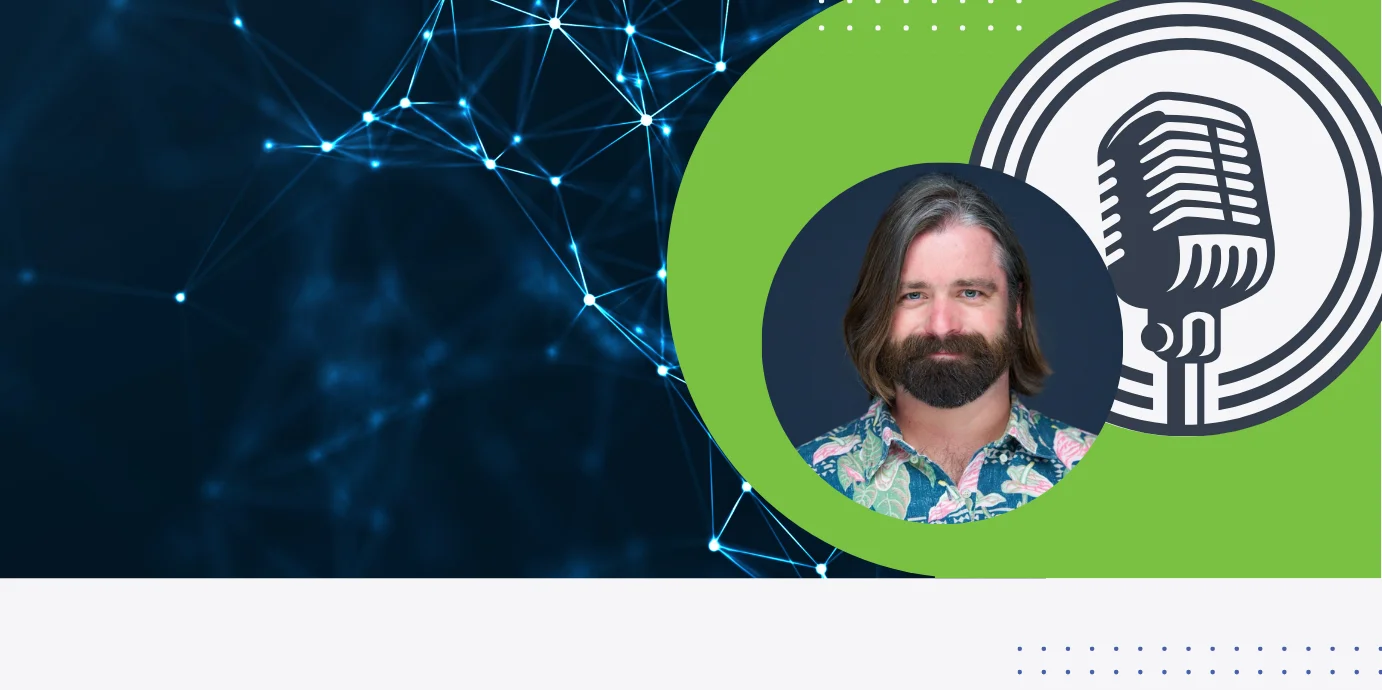
Nathaniel Harman - Episode 171 - The Route to Networking
17 March, 2026


From Legacy Tech to AI Architecture: How Engineers Can Future-Proof Their Careers
A conversation between George Barnes and Joe Limardo on the Route to Networking podcast
Artificial intelligence is no longer a future concept. It is already reshaping how businesses operate, how engineers build solutions, and how careers in technology evolve.
In this episode of The Route to Networking podcast, Hamilton Barnes CEO George Barnes sits down with AI and Cloud Architect Evangelist Joe Limardo to explore how the AI landscape has changed, what it really means for engineers on the ground, and how the next generation can position themselves to thrive in an AI-driven world.
Joe brings over a decade of experience spanning enterprise contact centre technologies, cloud platforms, and now real-world AI implementations across providers such as OpenAI, AWS and Google. What emerges is a grounded, practical view of AI, far removed from hype, fear-mongering, or “AI replacing humans” headlines.
From “Hot” Legacy Skills to Rapid Obsolescence
George and Joe first met more than ten years ago, working in the Cisco contact centre space, at a time when UCCE engineers were in such high demand that simply having the skillset almost guaranteed work.
Looking back, Joe reflects on how quickly technology cycles move:
“Back then, I thought I was on top of the mountain. Now I look at that technology and realise it’s legacy, and that was only ten years ago.”
The lesson is clear: no technology stays dominant forever. Engineers who survive long-term are the ones who continuously learn, adapt, and reposition themselves as new waves emerge.
The Biggest Shift in AI: Reasoning for Everyone
According to Joe, the real breakthrough of modern AI isn’t just access to information - we had that with search engines, but access to reasoning and synthesis.
“The knowledge and reasoning is now available to anybody. It helps you process huge amounts of data faster and get to where you need to go more efficiently.”
Large Language Models (LLMs) changed the game by allowing people to interact with systems conversationally, manipulate complex data, and generate outputs that previously required deep technical expertise.
Early on, many users treated tools like ChatGPT as glorified search engines. Today, businesses are starting to understand their real value: removing repetitive work, accelerating decision-making, and freeing people up to focus on higher-value tasks.
At Hamilton Barnes, George notes this shift firsthand, using AI to eliminate hours of manual, repeatable work and redeploy that time into more strategic activity.
AI Isn’t Replacing People - It’s Making Them Better
One of the biggest myths Joe pushes back on is the idea that AI will replace the workforce.
“AI isn’t replacing people - it’s making them faster, better, and more effective. It allows businesses to do things they simply couldn’t do before.”
From accounting and data analysis to customer service and job processing, AI is already embedded across operations. The real impact is not job loss, but role evolution.
The Hidden Cost of AI: Energy and Infrastructure
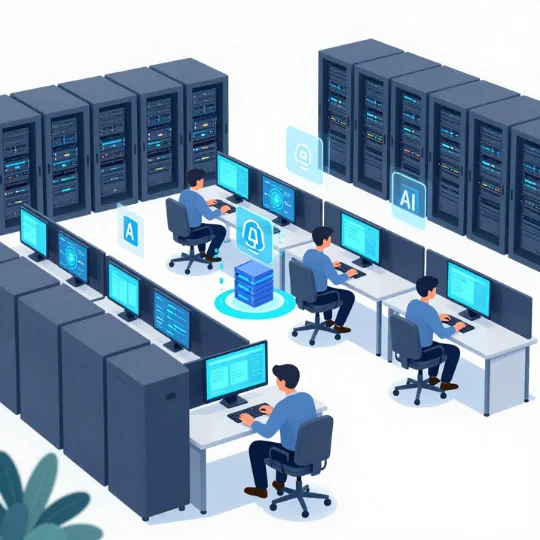
The conversation also turns to the less glamorous side of AI, power consumption and data centre scale.
Joe is candid:
“It’s extremely energy-hungry. The size of the data centres being built right now is outrageous.”
George adds perspective from hyperscale conversations, revealing that some AI data centres under development are comparable in physical footprint to entire cities.
This reality is shaping the next wave of engineering demand, from AI-optimised infrastructure to power, cooling, and data-centre architecture roles.
Claude vs ChatGPT: Tools with Different Strengths
Joe offers an insightful comparison between popular LLMs:
“Sometimes you need reasoning. Sometimes you need inspiration. Different models serve different purposes.”
The takeaway? Engineers and businesses shouldn’t be asking which tool is best, but which tool fits the problem.
How Engineers Can Transition into AI
When asked how engineers from networking, contact centre, or infrastructure backgrounds can pivot into AI, Joe’s advice is refreshingly practical.
His recommended learning order:
“Storytelling is a life skill. You don’t just need to build something - you need to explain why it matters.”
This blend of technical and human skills is what separates engineers who merely implement from those who architect.
Learning Faster Than Ever Before
Traditional learning paths, documentation, books, and static courses struggle to keep up with how fast technology moves.
Joe describes using LLMs themselves as teachers:
“You can train an LLM to become your tutor. Ask it to teach you step-by-step, create a plan, even tailor it to a timeframe.”
The result is accelerated learning that once took months or years, now happens in weeks.
Real-World AI in Action: Healthcare & Customer Experience
Joe shares examples of AI projects he’s worked on recently, particularly in customer experience and healthcare.
One standout use case involved building AI-powered voice and chat assistants for medical practices, capable of handling multilingual conversations, incomplete information, appointment changes, and nuanced patient requests.
“It’s not about replacing people. It’s about removing the repetitive pressure so humans can deliver better service.”
George immediately recognises the relevance to UK healthcare, where appointment systems are overloaded and staff are overwhelmed, a clear example of AI solving real, human problems.
What AI Still Can’t Replace: Human Judgement
Despite all its power, both George and Joe agree there is one thing AI still cannot replicate:
“Human judgement under uncertainty.”
Gut instinct, emotional context, ethical trade-offs, and lived experience all play a role in decision-making, especially when there is no perfect answer.
AI can support those decisions, but it cannot own them.
The Future Engineer: Fewer Coders, More Architects
Looking ahead, Joe predicts a shift in engineering roles:
“Companies may need fewer engineers doing pure coding, but more architects who can design systems, understand customer problems, and connect everything together.”
AI removes much of the low-level complexity. What remains is creativity, systems thinking, and problem-solving at scale.
One Piece of Advice for the Next Generation
If Joe had to distil everything into one message for young engineers entering tech today, it would be this:
“Learn APIs. Learn Python. Learn storytelling.”
Those three skills, he argues, are portable, future-proof, and valuable anywhere in the world.
The Quick-Fire Round: Stripping AI Back to What Matters
To close out the conversation, George put Joe through a quick-fire round, and the answers were telling in their simplicity. In just a handful of questions, Joe touched on the AI tools he relies on daily, the biggest misconceptions shaping public perception, and the skills he believes the next generation of engineers must prioritise as the industry accelerates.
The rapid-fire format also surfaced a deeper theme running throughout the episode: where AI’s capabilities end, and human judgment still matters most. It served as a fitting conclusion to a wide-ranging discussion, reinforcing that while technology continues to evolve at pace, the fundamentals of great engineering, curiosity, critical thinking, and clear communication, remain unchanged.
Listen to the Full Episode
This episode is a must-listen for engineers, technologists, and anyone considering a move into AI-driven roles.
🔗 Connect with Joe on LinkedIn here.