8 US Data Center Operators Driving AI Infrastructure
14 September, 2026


The future of AI infrastructure isn’t just being built by engineers.
It’s being shaped by investment decisions happening long before a single rack goes live. Where data centers get built, who funds them and how they scale.
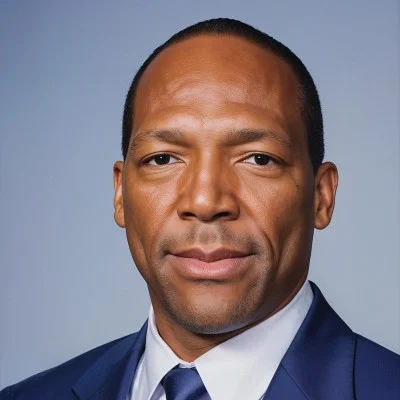
In this episode of The Route to Networking, Charlie Cassie sits down with Obinna Isiadinso, Global Sector Lead for Data Center Investments at the International Finance Corporation, part of the World Bank Group.
This conversation takes a slightly different angle.
Rather than focusing purely on engineering, it looks at what sits behind the infrastructure. The decisions, the capital and the strategy that determine where data centers get built and why.
Obinna’s route into digital infrastructure began in investment banking, where he first came across early connectivity providers in the US.
At the time, this was a new and disruptive model, something he describes as an early example of how quickly technology can reshape established markets.
“That was my first sort of exposure to a new disruptor type of model… and that dynamic is really always here to stay.”
He later moved into private equity, focusing on investments across Africa and Latin America, before transitioning into global data center investment.
Reflecting on that journey, one comparison stands out.
“The way the data center business has evolved globally… it reminds me a lot of the towers business.”
He describes a familiar pattern. Demand starts small, but as usage grows, infrastructure quickly scales to meet it.
Looking back, Obinna points to a clear shift in how data centers are perceived.
They were not always seen as essential infrastructure, but that view has changed significantly over time.
“Digital infrastructure is a necessity. It’s not really a luxury.”
He highlights the COVID period as a key moment, where the importance of digital infrastructure became far more visible.
As more services moved online, connectivity became critical to keeping businesses running, supporting remote work and maintaining access to services.
At the same time, he notes the sharp increase in demand across hyperscale, enterprise and AI-driven use cases.
When discussing global markets, Obinna highlights how differently infrastructure develops depending on the region.
In developed markets, there has been long-term investment across both mobile and fixed-line connectivity, including fibre networks.
In emerging markets, that level of investment has been more limited, particularly in fibre, leading to a different approach.
“There’s been more leapfrogging of technology in emerging markets as opposed to developed markets.”
He explains that in many cases, this has meant moving more directly towards mobile infrastructure to provide access to connectivity.
On the data center side, he notes that development is still at an earlier stage in many of these markets, although demand is increasing.
From an investment perspective, Obinna is clear that not every project moves forward.
He talks through a number of factors that need to be in place before funding is considered, starting with confidence in the market and the balance between supply and demand.
Avoiding oversupply is a key consideration, alongside ensuring there is enough demand to support long-term growth.
He also emphasises the importance of experience. Data centers are highly technical, mission-critical assets, and operators need to be able to meet strict requirements around uptime, power and connectivity.
Sustainability is another area he highlights.
“We want to see data centers designed at PUE levels… in line with global standards.”
This includes efficiency in power usage, water consumption and the materials used in construction.
When it comes to AI, Obinna points to a clear shift in both the scale and type of infrastructure being developed.
Project sizes have increased significantly, moving from smaller megawatt deployments to much larger hyperscale environments.
He also highlights the rapid increase in investment.
“Last year… around $450 billion… this year projecting something like $600 billion in AI-related CapEx.”
While much of this is focused on large-scale AI training infrastructure, he also notes growing demand for smaller facilities that support AI inference, often closer to end users.
Power is another area Obinna spends time on, particularly as projects continue to scale.
“Power connectivity is definitely the key bottleneck in this business.”
He explains that in some developed markets, securing power for large projects can take several years.
In emerging markets, the challenge is often different, with issues linked more to generation capacity and grid reliability.
As demand continues to grow, he expects power to become an even more important factor in how and where data centers are developed.
Looking ahead, Obinna describes a market that is continuing to expand globally, although much of the investment is still being driven by US hyperscalers.
A large portion of capital remains focused on the US, particularly for large-scale AI infrastructure, but some of that investment is beginning to extend into other regions.
He points to Asia as a major area of focus, particularly India and Malaysia, where there is already consistent hyperscale activity and continued demand for cloud and AI infrastructure.
“Asia… India… that’s definitely one to watch.”
He also highlights Latin America, especially Brazil, alongside continued development across parts of Europe.
The Middle East is another region seeing increased investment, with countries such as the UAE and Saudi Arabia looking to bring significant AI infrastructure online.
In Africa, he notes a slightly different trend. While large-scale AI training deployments may be more limited, there is expected growth in cloud infrastructure and AI inference.
Looking ahead, he expects this expansion to continue across multiple regions, supported by ongoing demand and increasing interest from governments looking to develop infrastructure within their own markets.
When it comes to careers, Obinna highlights how the industry is evolving.
He points to growing demand for skills in areas such as project development, energy and power infrastructure, as well as the ability to work closely with customers.
At the same time, he acknowledges a clear talent gap.
“There’s really a deficit of talent… more people leaving the industry than coming in.”
This creates opportunities for those looking to enter or progress within the industry.
For those starting out, Obinna keeps his advice simple.
“Be proactive… learn as much as possible… and reach out to people in the industry.”
He emphasises the importance of building knowledge and making connections in what remains a relationship-driven market.
We wrap up with our usual quick-fire questions, covering the biggest challenge facing data centers, whether cloud or AI will dominate long term, the most overused buzzword in the industry, the most underrated role and which region is set to grow fastest.
You will have to listen to hear his answers.
This episode offers a clear view of how investment decisions are shaping the development of digital infrastructure globally, and how AI is influencing both demand and scale. Well worth a listen if you want a clearer understanding of where things are heading.
If you would like to connect with Obinna and follow his insights on global data center investment, you can find him on LinkedIn.