Paul Chu - Episode 167 - The Route to Networking
05 February, 2026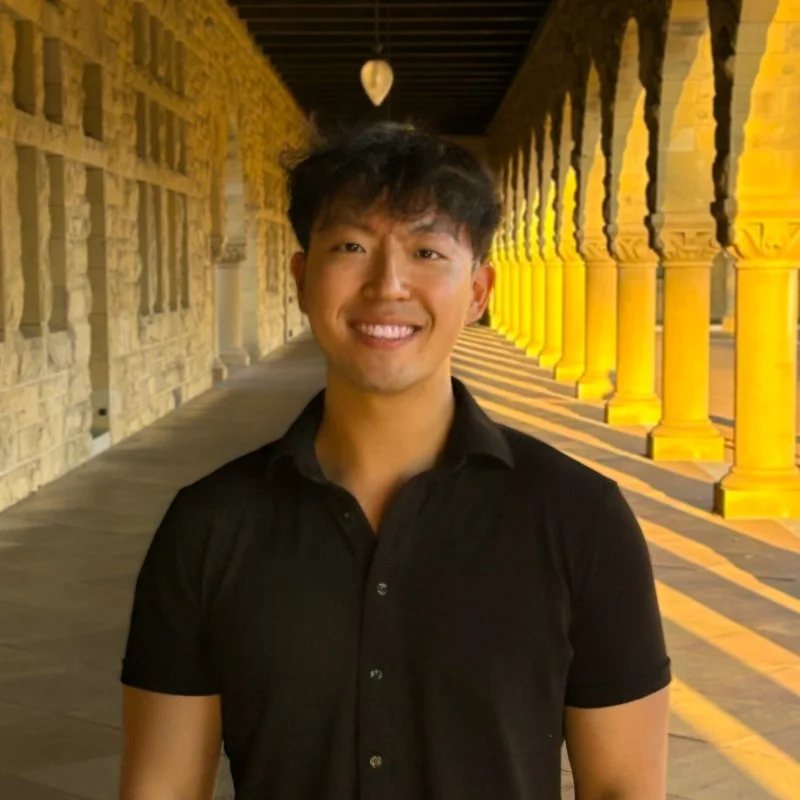
From Paris to Palo Alto: Paul Chu on Breaking into the AI Frontier
AI and software engineering are moving at a pace that often leaves traditional education systems playing catch-up. While the industry is dominated by established giants, the real pulse of innovation is often felt elsewhere, in high-pressure hackathons, research labs, and communities where people are actively building, experimenting and learning in public.
In this episode of The Route to Networking podcast, host Antonio speaks with Paul Chu, an AI software engineer and Master’s student at ENS Paris-Saclay. Paul’s journey has taken him from the walkable streets of Paris to the cutting-edge ecosystem of Stanford and the Bay Area. Along the way, he has navigated competitive research environments, immersed himself in hackathons, and learned first-hand why being in places where you feel like you’re not supposed to be can become the ultimate catalyst for growth.
A Foundation in Data and a Leap to Stanford
Paul’s path into technology began early, leading him into a competitive five-year engineering programme in France. While his academic focus was data analysis and data engineering, he was already drawn toward practical problem-solving rather than theory alone.
That direction became unmistakably clear during a research exchange programme in the United States.
“I was exposed to that environment, research labs, ambitious people, and cutting-edge projects and from there, moving forward to AI felt very natural.”
The move to Stanford was not accidental. Paul secured a $15,000 research grant, which opened the door, but it was his approach that made the difference. He carefully selected the electrical engineering department to align with his background and positioned himself not around prior research credentials, but around curiosity, motivation and speed of learning.
“I didn’t have a research background before that. I really had to show my motivation and my ability to adapt quickly.”
That mindset paid off. During his time at Stanford, Paul had the chance to audit lectures from some of the most influential figures in AI, including Andrew Ng.
“The room was completely packed. People were sitting on the floor. I couldn’t really believe he was right in front of me.”
Hackathons: A Pressure Cooker for Skills and Confidence
For many students, hackathons feel optional, intimidating even. For Paul, they became a defining part of his development.
His first hackathon took place in March 2024 at a San Francisco event hosted by Mistral AI. Despite feeling “very scared” about exposing gaps in his knowledge, his team went on to win.
“Hackathons taught me to learn fast and to work as a team. When you’re under time pressure, you have to build something that actually works.”
What mattered most wasn’t what Paul already knew, but how quickly he could adapt. At a later robotics hackathon, he joined a team of PhD students despite having no background in robotics at all.
“That’s when you really learn how to fill the gaps when it’s needed.”
Hackathons, he explains, compress real-world learning into a single weekend, collaboration, communication, problem-solving and delivery, while also quietly building a network of like-minded peers across Paris and San Francisco.
Paris vs San Francisco: Two Ecosystems, Two Mindsets
Having lived and worked in both environments, Paul offers a grounded comparison of the two tech ecosystems.
Paris’s tech scene has grown rapidly, but San Francisco, he says, still feels different.
“In San Francisco, you’re always surrounded by passionate people, builders, founders, people who want to make things happen.”
Opportunities emerge not only through formal events, but through meetups, shared workspaces and even casual conversations. Palo Alto, while more niche, remains closely connected to Stanford’s network, while San Francisco offers a broader, more open ecosystem for early-career engineers.
“For me, if you want to be close to what’s changing every day in tech, there’s nowhere quite like it.”
Networking, Visibility and Stepping Outside the Comfort Zone
Despite describing himself as naturally introverted, Paul credits networking, when approached organically, as one of the most influential forces in his journey.
“Being in places where you feel like you’re not supposed to be, that’s where growth happens.”
Rather than forcing conversations, Paul found that the most meaningful connections came from shared experiences: hackathons, meetups, research environments and curiosity-driven conversations. He encourages early-career engineers not to self-exclude simply because they feel underqualified.
“The more people you meet, the more opportunities you get.”
That willingness to step into discomfort also shaped how Paul approached visibility.
Documenting the Journey Without Overthinking the Outcome
Paul didn’t start documenting his journey as a career move or personal-branding strategy. His YouTube channel began as a creative outlet, a way to reflect, experiment and share what life inside Stanford and the Bay Area actually looked like.
“I see it like writing your daily life, but instead of a book, you make a movie where you’re the main character.”
By sharing his routines, projects and progress openly, Paul unintentionally created connection and credibility. For many in the French tech community, his content offered a rare, relatable window into an environment that can otherwise feel distant or inaccessible.
More importantly, visibility made conversations easier and more genuine in ways a traditional CV never could.
AI as an Enabler, not a Shortcut
AI plays a central role in Paul’s work and daily life, from research to time management. But he’s clear that tools alone don’t create progress.
“You still need to learn how to use AI correctly.”
What excites him most is accessibility. Powerful tools are now available to anyone willing to experiment and build, removing many traditional barriers to entry.
“Everyone now has access to powerful tools. You don’t need permission to start building.”
For Paul, the opportunity lies not in replacing effort, but in amplifying curiosity and momentum.
Advice for the Next Generation of AI Engineers
When asked what advice he would give to those trying to follow a similar path, Paul’s answer reflects the themes running through his entire journey.
Progress doesn’t come from waiting to feel ready. It comes from direction, action and repetition.
Start before you feel ready
Learn by doing, not waiting
Be clear on your direction, actions will follow
Don’t stay in your comfort zone for too long
“The real mistake isn’t failing. It’s not trying.”
A Quick-Fire Round Worth Listening To
The episode closes with Paul reflecting on career-defining moments, including recording his first hackathon win as a YouTube vlog, attending Andrew Ng’s lectures at Stanford, and researching large language models at a time when they were still in their early stages.
Listen to the full episode of The Route to Networking podcast to hear Paul’s journey in his own words and explore what it really takes to navigate the fast-moving world of AI software engineering.
Related Posts

Gary Cudmore - Episode 172 - The Route to Networking
25 March, 2026
Nathaniel Harman - Episode 171 - The Route to Networking
17 March, 2026