Nicholas Desilas - Episode 178 - The Route to Networking
01 September, 2026

“I think people oversimplify and say, ‘We don’t even need a network engineer.’ It’s the opposite. We need experts.”
AI may be changing almost every corner of technology, but for Rekha Shenoy, one thing is becoming increasingly clear: understanding the fundamentals matters more, not less.
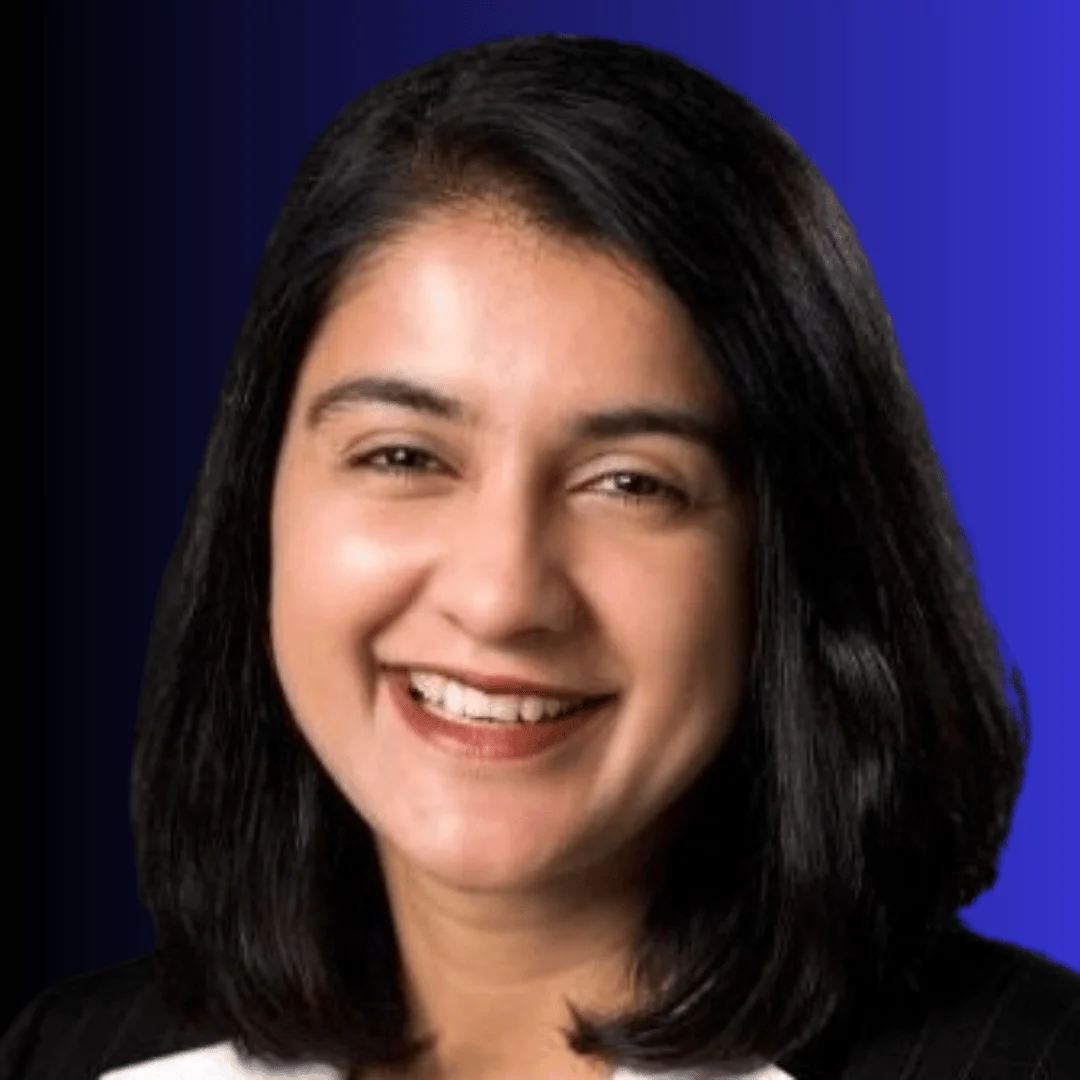
Rekha is CEO of BackBox and has spent more than two decades working across networking, enterprise software and cybersecurity. Her own career has taken what she describes as a “long, winding journey”, from computer engineering and product management to leading marketing, sales, finance and engineering functions, all within technology.
Joining Holly Staff on The Route to Networking podcast, Rekha explored how networking has evolved through cloud, cybersecurity, automation and now AI, why genuine technical expertise will become increasingly valuable and what the next generation of engineers should be doing to prepare.
Rekha did not grow up with a carefully mapped-out plan to build a career in networking.
Growing up in India with good grades, she jokes that there was an expectation to explain why she did not want to become a doctor. Engineering seemed like the other obvious route.
What began almost by circumstance ultimately opened the door to a career spanning numerous areas of technology.
She started as a computer engineer but quickly realised that sitting at a desk writing code all day was not for her. Product management followed, then roles encompassing marketing, sales, finance and engineering.
Throughout all those changes, however, one thing remained constant: the value of understanding the fundamentals.
That foundation allowed Rekha to move between disciplines while still understanding the technology beneath them. It is also why she believes networking remains such an exciting career today.
“If you’ve never considered it as a career, I’d certainly recommend it now.”
Rekha has watched the technology landscape transform dramatically over the course of her career.
Networks have moved far beyond traditional switches and routers. Cloud computing, hybrid working, zero trust and cybersecurity have fundamentally changed where networks exist and how organisations protect them.
Yet Rekha believes the purpose underneath all that technology has remained remarkably consistent.
“This has never been technology for the sake of technology. This is actually technology enabling business.”
Jobs evolve. Technology evolves. The environments engineers are responsible for evolve.
But networks are still supporting the mission-critical systems businesses depend upon, and expectations around uptime and availability have only increased.
AI, Rekha argues, is simply the next major transformation.
The difference this time is the speed.
Rekha sees striking similarities between the adoption of cloud and what is happening with AI today.
Cloud initially arrived with huge excitement. Organisations experimented independently, before eventually discovering the need for governance, security, accountability and control.
That journey took years.
AI is travelling along a similar path in months.
Businesses rushed to experiment with tools and explore where AI could replace manual work. Now, many are beginning to confront more difficult questions around hallucinations, governance, accountability and cost.
For Rekha, the answer is not to reject AI, but to stop treating it as a replacement for people.
Instead, organisations need to build governance and accountability around it and use responsible AI as an enabling layer.
The transformation is happening either way. The challenge is making sure businesses learn quickly enough to implement it properly.
With so much attention focused on AI, it can be tempting for somebody beginning their career to skip traditional networking skills and head directly towards the newest technology.
Rekha thinks that would be a mistake.
“The networks truly run the world today.”
Governments, hospitals, banks and businesses all rely upon network infrastructure. When those networks fail, the consequences are real.
AI can increasingly handle repetitive work, and Rekha describes its future role as something like a “smart intern” for engineers.
But somebody still needs to understand whether what that intern is doing is correct.
When infrastructure fails, AI does not carry accountability. The engineer responsible for that environment does.
That means engineers will need deeper expertise, not shallower knowledge.
Rather than removing the network engineer, automation could move engineers away from repetitive tasks and towards higher-level decision-making, troubleshooting and management.
“It’s the opposite. We need experts.”
Rekha is equally sceptical of the idea that simply knowing how to use AI will provide long-term career differentiation.
Prompting tools may feel like a specialist skill today, but she expects AI literacy to become commonplace.
She compares it to somebody saying they “know computers” today. That knowledge is simply expected.
AI will eventually be the same.
What will differentiate somebody is the expertise they bring alongside it.
For a network engineer, that means genuinely understanding network infrastructure, connectivity, availability and the systems for which they are responsible.
Rather than asking how good am I at AI?, Rekha encourages professionals to ask a harder question:
What do I know deeply enough to make myself valuable?
Being broader and deeper within a specialism creates longevity that simply following the latest technology trend cannot.
The growing capabilities of AI also introduce another challenge.
Rekha describes cybersecurity as an AI “arms race”.
Attackers can use AI to discover vulnerabilities, build exploits and operate at a scale and speed that previously required far greater technical expertise.
At the same time, defenders can use the same technology to respond faster.
That makes automation increasingly important.
Network engineers already spend significant amounts of time on maintenance work such as patching, upgrades, configuration and backup and recovery. Rekha believes removing more of that manual workload gives engineers the space to concentrate on the strategic work that actually requires their expertise.
It is also central to the work being done at BackBox, where the focus is on automating repetitive network tasks while helping organisations improve resilience and respond to vulnerabilities more effectively.
Rekha describes BackBox as a “trusted engineer for a network engineer”, helping to take away the manual workload while keeping human expertise and judgement at the centre.
The objective is not to remove the human.
It is to give the human better tools.
As AI infrastructure expands, the networks supporting it become larger and more complex too.
More infrastructure means greater bandwidth requirements, more systems to secure and more equipment to maintain.
As Rekha puts it simply:
“It just made everything more.”
Organisations cannot continue responding to that scale simply by adding more engineers.
Automation therefore moves from being something businesses should probably do to something they increasingly have no choice but to embrace.
Rekha expects this to reshape network careers as well. Network automation engineers will become more mainstream, while roles such as AI fabric specialists will emerge alongside traditional network engineering positions.
The traditional network engineer is not disappearing.
The role is becoming broader.
So what should an engineer actually learn?
Rekha’s advice is refreshingly uncomplicated.
Understand networking properly.
Develop deep expertise in one or two systems.
Then use AI and automation to extend what you can do.
As networking, security and infrastructure become increasingly intertwined, engineers will need to understand areas such as zero trust, software-defined networking, SASE and identity alongside traditional networking principles.
Nobody can realistically become an expert in every piece of infrastructure.
That is where automation becomes useful.
But automation cannot compensate for somebody who never understood the foundations in the first place.
“Understand the basics well, be an expert on one or two systems, and arm yourself with AI to help you with the broader context.”
For organisations, Rekha believes one of the next major conversations will be around responsible and trustworthy AI.
Businesses are already asking questions about data, intellectual property and governance, but those questions become considerably more serious when AI is being introduced into mission-critical infrastructure.
What is the AI doing?
Where did its information come from?
What happens when it gets something wrong?
And, crucially, who is responsible when it does?
For Rekha, explainability and accountability cannot be afterthoughts.
She believes more mature organisations will increasingly develop stronger governance frameworks as the market moves beyond simply adding AI functionality because everyone else is doing it.
For students, graduates and engineers at the beginning of their careers, Rekha has another piece of advice.
Do not worry about knowing everything.
Learn how to keep learning.
“The ability to be a learn-it-all as opposed to a know-it-all, it was always true. It became even more true now.”
Technology is evolving too quickly for somebody to build a career around a fixed set of knowledge.
Instead, Rekha believes the ability to pick up new skills quickly will become increasingly valuable.
Build strong foundations, stay curious and demonstrate that you can adapt as the market changes.
“Your ability to learn a new skill is going to take your career very, very long.”
Before wrapping up, Holly put Rekha through the podcast’s Quick-Fire Round, touching on everything from the future of infrastructure and the technology trends she is most excited about to cybersecurity habits and the mistakes young professionals make when starting out.
One of Rekha’s final messages is particularly relevant for graduates entering a difficult market.
Do not allow the fear that AI will take your job to stop you from building one.
“Don’t fall for it, specialise, build some skills, go pursue your passion.”
Her advice is to stick with it, find what differentiates you and recognise that periods of disruption can also create some of the greatest opportunities for innovation.
AI will change networking.
Automation will remove repetitive tasks. New roles will emerge. Engineers will work differently, cybersecurity threats will evolve and the infrastructure supporting AI will create entirely new challenges.
But Rekha’s message throughout the conversation is reassuringly consistent.
Do not mistake changing tools for disappearing expertise.
The people who understand how networks work, who develop genuine depth in their field and who can keep learning as technology evolves will remain enormously valuable.
AI can become the smart intern.
Someone still needs to know enough to manage it.
Listen to the full episode of The Route to Networking to hear Rekha Shenoy’s complete conversation with Holly Staff, including her thoughts on the future of AI, networking, cybersecurity, automation and the advice she would give to the next generation of engineers.